HVAC Repair in Kansas City MO: Humidity Issues and AC Dehumidification Fixes
Kansas City summers have a way of testing comfort in a hurry. You can have a perfectly functioning air conditioner that “cools,” yet your house still feels sticky. The thermostat might say you are at 74°F, but your skin feels clammy and the air tastes damp. That’s usually not a mystery, it’s humidity. And in Kansas City MO, where warm, humid air can press in for days, humidity control is often the difference between a system that runs and a system AC maintenance in Kansas City that actually makes the home feel right.
I’ve walked into plenty of homes where the homeowner says, “My AC is fine, it’s just not comfortable.” Those calls are where humidity becomes the story, not the temperature.
This article breaks down why humidity problems happen, how to recognize dehumidification failures, what real repair work looks like, and what HVAC contractor in Kansas City MO services typically do to restore comfort. I’ll also explain trade-offs so you know what to ask for, what to expect, and when the best fix is not the one that sounds simplest.
When “cooling” isn’t the same as dehumidifying
An air conditioner’s job is to remove heat from indoor air. But most people experience the results as moisture removal. As warm, humid air moves across cold evaporator coils, water condenses out. That condensation is the physical proof that the system is doing what it should.
If your AC runs but does not remove enough moisture, you get that damp feeling. Then other symptoms follow:
- rooms that feel warmer than the thermostat setting
- musty odors or a “wet drywall” smell in closets and corners
- surfaces that stay damp, like window sills, baseboards, or the inside of bathrooms
- lingering humidity after the AC cycle ends
Sometimes humidity issues come from a refrigerant or airflow problem. Other times, it’s a thermostat setting, duct design, or a duct leak that lets humid air sneak back into the return path. A humidity complaint can be caused by more than one thing, and that’s where good HVAC repair in Kansas City MO earns its keep.
Why humidity runs the show in Kansas City summers
Kansas City’s weather is the setup. When outdoor air is humid, your home becomes a sponge. Doors open, garage air mingles with indoor air, bathroom fans vent somewhere, and even small leaks around windows, duct boots, and attic penetrations can introduce moisture.
Meanwhile, your AC must keep up consistently. Dehumidification depends on a few “system conditions” being true at the same time:
- The evaporator coil needs to get cold enough
- Indoor airflow must be moving through the coil, but not so fast that coil temperatures stay too high
- The system must run long enough and steady enough to actually pull moisture out
- Indoor air must circulate through the return, not short-cycle straight back to the supply
When any of those conditions are off, the AC can still feel like it’s “working,” especially if it brings the temperature down a bit. The moisture removal just doesn’t happen at the rate your comfort needs.
Common reasons your AC is not dehumidifying
I’ll walk through the most frequent causes I see, and how they show up in real homes. These are not theoretical. They’re the patterns that show up after repeated calls in Missouri.
1) The evaporator coil isn’t getting cold enough
If the coil runs warm, water may not condense, or it condenses too slowly to make a noticeable difference. Causes range from refrigerant charge issues to airflow problems that keep the coil from dropping to the temperature it needs.
A “not cold enough” coil can also happen when the system is oversized. An oversized AC often cools quickly, then shuts off before it removes enough moisture. It might reach the thermostat setpoint, but the indoor air never gets enough time at coil conditions that produce condensation.
2) Airflow is restricted (dirty coil, dirty filter, or blower issues)
Humidity removal and airflow are linked. If the filter is clogged, return ducts are undersized, supply registers are blocked, or the evaporator coil is caked with debris, airflow can drop. On paper, reduced airflow might seem like it would cool the house better, but what often happens is the system gets less effective at transferring heat. Coil temperatures can become unstable, and the blower can operate in a way that produces comfort complaints.
A quick note about filters: homeowners sometimes run very restrictive filters “to improve air quality.” Some do more harm than good if the return system was designed with different airflow in mind. If humidity is already a concern, the wrong filter can make it worse.
3) The system is short-cycling
Short cycling is an underrated humidity problem. If the compressor starts and stops too frequently, the coil doesn’t stay cold long enough for moisture to condense at a meaningful rate. Short cycling can result from thermostat settings, electrical issues, a failing capacitor, a clogged condensate drain that causes safety shutdowns, or refrigerant control issues.
If you hear frequent clicking or the outdoor unit runs only in quick bursts, that’s a clue.
4) Duct issues: leaks and pressure imbalances
This one gets overlooked because it doesn’t look like an “AC problem.” A leaky return duct can pull in humid air from the attic or crawl space. Or a supply leak can push conditioned air out before it reaches the occupied rooms, so the system keeps trying while humidity stays behind.
Also, improper duct balancing can cause the air handler to move air in a best AC repair in Kansas City MO way that doesn’t promote good dehumidification across the coil. You may have plenty of cold air at registers, but the coil process isn’t efficient for moisture removal.
5) Thermostat and operation mode settings
Some people run the thermostat fan continuously. Continuous fan can feel comfortable because it circulates air, but for humidity removal, it can sometimes work against the process depending on system type and airflow design. The blower being on longer does not guarantee the coil is operating under optimal dehumidification conditions.
Similarly, thermostat settings that keep the system from running longer cycles can contribute to under-dehumidification. It’s not that the thermostat is “wrong,” it’s that humidity comfort requires operating conditions that the thermostat may not be optimizing.
6) Condensate drainage and humidity “backing up”
If the condensate drain is partially blocked, it can cause safety switches to shut down the system before the coil has extracted enough moisture. Sometimes the drain is slow, so the system runs, but the coil gets wet only to a point, then conditions change and dehumidification drops off.
A clue is water overflow stains near the air handler or recurring drip tray issues.
How to tell if the problem is humidity versus airflow or refrigerant
You don’t need lab equipment to spot the pattern. The key is to observe what happens during a humid stretch, when the outdoor air is most likely to overwhelm the home.
Here’s a practical way to think about it:
- If the temperature drops but the air stays sticky, and humidity is high even while the AC runs, think dehumidification capacity or coil performance.
- If the air feels cool but not much water is collecting in the condensate drain line (or the drain seems inconsistent), that points toward coil temperature and condensation issues.
- If the blower seems to run but the outdoor unit cycles too quickly, short cycling or thermostat logic could be involved.
- If you notice moisture issues tied to certain rooms, it may be duct leakage, return problems, or how air is distributed.
If you have a humidity sensor, you can add real numbers to your observations. Many comfort complaints track with indoor relative humidity that remains elevated during cooling. Even without exact readings, “sticky even at the set temperature” is a strong signal that moisture removal isn’t keeping up.
What HVAC technicians do during AC dehumidification repair
When you hire HVAC repair in Kansas City MO, the best calls are the ones where the technician diagnoses conditions, not just replaces parts. Dehumidification failures are usually a systems problem, so the process needs to be methodical.
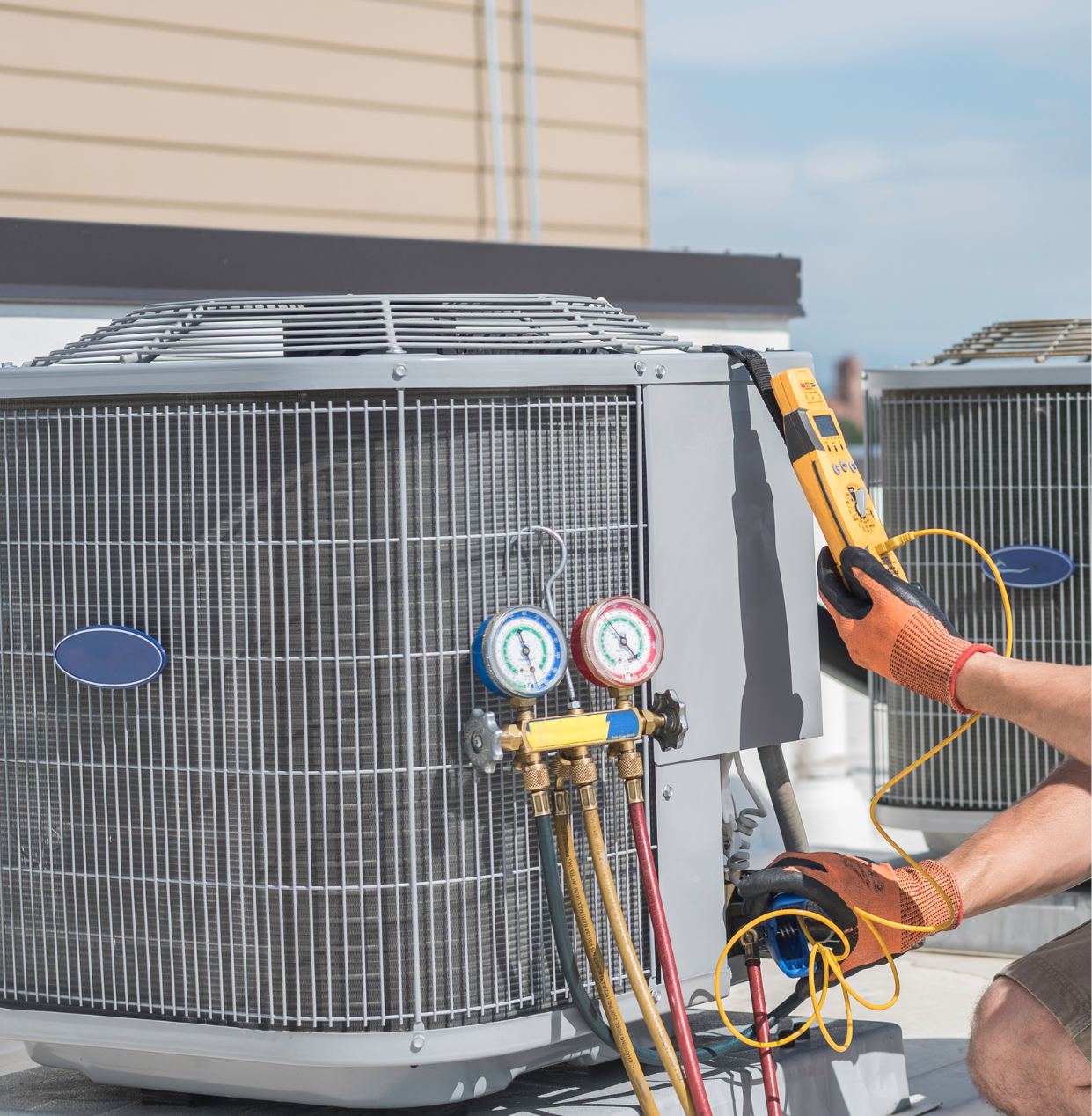
A typical service visit should include checking airflow, inspecting the evaporator coil condition, verifying refrigerant performance under real operating conditions, and confirming drain operation. If duct issues are suspected, some contractors go beyond basic visual checks and look at return and supply pressures and leakage pathways.
I want to highlight something important: it’s easy to talk about “fixing humidity” but hard to do it without understanding what the equipment is actually doing. That means:
- verifying the air handler blower speed and airflow behavior
- checking filter condition and duct restrictions
- inspecting coils for buildup that can reduce heat transfer
- testing condensate drainage and observing discharge behavior
- assessing whether the system is sized appropriately for the load and the home’s envelope
If a contractor starts by guessing only one component, you might still end up with a repair, but you’re more likely to miss the root cause.
Real-world fix options that restore dehumidification
Not every humidity issue requires the same kind of repair. Below are the kinds of solutions that commonly bring homes back to comfortable, dry air. I’ll keep this grounded in what technicians actually encounter.
Cleaning and coil performance restoration
Dirty evaporator coils act like an insulating layer that reduces heat transfer. When moisture transfer drops, dehumidification drops. Coil cleaning is not glamorous, but it’s one of the most common “before you replace anything” fixes.
Sometimes the issue is not just dirt on the coil. It can be inadequate airflow across it, which is why technicians often look at the whole path.
Airflow corrections and blower settings
If airflow is wrong, the system can cool the air but not in the moisture-removal way you want. Adjusting blower speed, correcting restrictions, and ensuring registers are open and returns are unobstructed can improve both comfort and efficiency.
In a Kansas City home, I’ve seen cases where a return was squeezed by storage or where duct connections were disturbed during prior work. The result was poor return performance and humidity complaints.
Refrigerant and refrigerant control verification
Refrigerant charge and control matter for coil temperature. An undercharged system can fail to produce the coil conditions required for condensation. An overcharged system can also produce poor performance and affect temperatures in ways that reduce dehumidification efficiency and increase risk to the compressor.
A careful diagnosis matters because the “fix” might not be a simple refill. The goal is stable, correct operation, not just hitting a number.
Repairing leaks and balancing airflow
Duct leakage can create humidity problems that feel like the AC is weak. If return ducts leak into humid spaces like an attic, you can cool the house while the system keeps pulling in moisture-laden air.
Repair work can include sealing connections, correcting duct sections, and verifying that the air handler is moving air in a way that supports dehumidification. In homes with crawl spaces, this can be especially important, because the return path can pick up moisture easily.
Addressing short cycling and electrical reliability
If the system is short cycling, fixing the cause can immediately improve humidity control. That might involve replacing faulty capacitors, addressing sensor problems, or repairing issues that interrupt compressor operation.
Also, the thermostat and control logic can contribute. In some cases, a simple operational adjustment improves dehumidification because it allows longer run times while still maintaining comfort.
Considering equipment upgrades when the system is mismatched
Sometimes the equipment is simply not able to meet the home’s needs in humid conditions. Oversized systems cool quickly, stop early, and leave moisture behind. That’s not a defect, it’s a mismatch.
If you’re dealing with a system that is oversized or outdated, upgrading can improve both comfort and energy use. Modern systems and better zoning strategies can help, but the best approach depends on duct design, home layout, and whether humidity is the main complaint or one of several.
A good AC installation in Kansas City approach treats humidity comfort as a requirement, not an afterthought. The contractor should ask questions about indoor humidity history and how the home behaves during humid stretches.
Trade-offs you should expect, especially with humidity control
Humidity fixes can come with trade-offs. Being aware of them helps you avoid disappointment.
If an AC runs longer to dehumidify, indoor temperatures might feel slightly different during peak operation. Sometimes you get a more consistent comfort feel, but the cycles are not as “snappy.” That’s normal for good dehumidification.
In systems where the blower runs differently to enhance coil performance, you might notice subtle changes in airflow noise. Also, humidity control can be limited by the home’s air tightness. If the house has significant moisture infiltration, the AC will run more, and the humidity may still be higher than ideal.
Another trade-off is that some “comfort settings” can reduce humidity extraction. For example, keeping indoor targets too tight or using modes that shorten runtime can keep the home cold without removing as much moisture. If you want that dry feeling, you usually need to prioritize dehumidification-friendly operation.
Specific clues that point to the right repair path
When I talk to homeowners, I ask questions that quickly narrow down the likely cause. The details matter.
If you tell me:
- the air feels cool but sticky
- the system runs briefly and frequently
- the condensate drain seems light for the length of run time
- humidity climbs fast when the outdoor air is humid
- bathroom exhaust doesn’t seem to help
I’m going to look hard at coil conditions, airflow, and short cycling. If you also mention that some rooms feel clammy while others feel fine, I’m going to inspect distribution and return paths.
If you mention ongoing musty smells, I’m thinking about moisture that’s staying in the building materials. That’s where duct leaks and poor dehumidification intersect.
What to ask an HVAC contractor in Kansas City MO before work begins
You can do a lot just by asking the right questions. A professional contractor should be able to explain what they found and what they plan to do in plain language.
You don’t need a textbook. You need answers that connect the diagnosis to the fix. Here’s a short list of questions that usually lead to a useful conversation:
- What measurements will you check to confirm the dehumidification problem, and what readings would change your plan?
- How will you verify airflow across the evaporator coil and check for restrictions?
- Will you inspect the condensate drain and confirm that it is discharging properly during operation?
- If duct leakage is suspected, how do you plan to evaluate return and supply connections?
- Is the system operating oversized for this home, and if so, what realistic options exist?
Those questions help separate “part replacement” from “problem solving.” They also show that you care about humidity performance, which is exactly what you should.
Maintenance steps that prevent humidity callbacks
A repair can fix today’s issue, but maintenance prevents the next round of discomfort. AC maintenance in Kansas City is not just about changing a filter and hoping for the best, especially when humidity is part of the complaint.
Here are the most practical maintenance items I recommend homeowners focus on:
- check and replace air filters on schedule, using the manufacturer’s specs as a baseline
- keep returns and supply registers clear, avoid furniture or storage blocking airflow
- monitor condensate drain performance if you notice slow draining or water odors
- schedule periodic inspections so coil and blower conditions are caught before they degrade performance
One of the easiest ways to avoid humidity issues is to catch airflow problems early. A filter that’s moderately dirty can reduce comfort noticeably during humid stretches.
How to manage comfort while repairs are pending
If your AC is currently under-dehumidifying, you can reduce the discomfort while you schedule service. You’re not fixing the root cause, but you can take the edge off.
Avoid sealing the house so tightly that you trap indoor moisture without a plan, especially if you run bathrooms and laundry indoors. Make sure exhaust fans run long enough after showers. If you have a dehumidifier, it can act as a bridge while the AC is being repaired, but it’s still better to restore the AC’s own moisture removal.
Also pay attention to doors. If you have a basement, garage connection, or crawl-space access that allows humid air intrusion, limiting that airflow helps your AC do its job.
When you should suspect the home envelope, not just the unit
Sometimes the AC is doing what it can, but the home keeps feeding it moisture. That’s when humidity repairs feel stubborn, and it’s frustrating for homeowners who do everything right.
Signs the envelope may be contributing include:
- humidity spiking in the same areas repeatedly
- visible condensation on windows or walls even when the AC runs
- musty odors that persist even after repair work
Air sealing and improving ventilation strategy can be part of a full comfort plan. That doesn’t mean skipping AC repair, it means treating humidity as a house and system problem. A good HVAC contractor in Kansas City MO will coordinate the mechanical fix with realistic building improvements when the situation calls for it.
Choosing the right direction: repair now or plan a larger upgrade
If your current AC is older and you’re facing repeated humidity complaints, it might be time to talk about long-term options. The question is not just “can we fix it?” The question is “will fixing it reliably solve the humidity performance without turning into a repeated cycle?”
Consider factors like:
- how often the system runs and whether it’s short cycling
- whether airflow issues are recurring due to duct or blower design
- whether the system is sized for the home’s cooling and humidity loads
- whether refrigerant performance issues are showing up more than once
A thoughtful AC installation in Kansas City decision includes humidity performance goals, not just equipment efficiency. If you upgrade, ask how the system and duct setup will support dehumidification during Kansas City humidity peaks.
Final thoughts on comfortable air in humid weather
Humidity is where comfort goes to either succeed or fail. In Kansas City MO, where summer moisture can linger, AC dehumidification is often the true performance metric behind the scenes.

When you feel sticky air despite cooling, you’re not imagining it. Your system is likely not maintaining the evaporator coil conditions, airflow balance, or run time needed for effective moisture removal. The right HVAC repair process targets those conditions, not just the thermostat symptom.
If you’re dealing with persistent humidity, the best next step is a diagnosis that treats dehumidification as a measurable outcome. Ask what measurements will be checked, how coil performance and airflow will be verified, and how duct and drainage issues will be ruled in or out.
Comfort is not just temperature. It’s how the air feels on your skin, how the house smells after the sun goes down, and whether the moisture stays where it belongs. When humidity control is restored, the whole home feels calmer, even when the weather outside is doing its best to push back.
All 4 One Heating & Cooling
5828 Woodland Ave, Kansas City, MO 64110, United States
816-699-8366
[email protected]
Website: https://all4onekc.com/